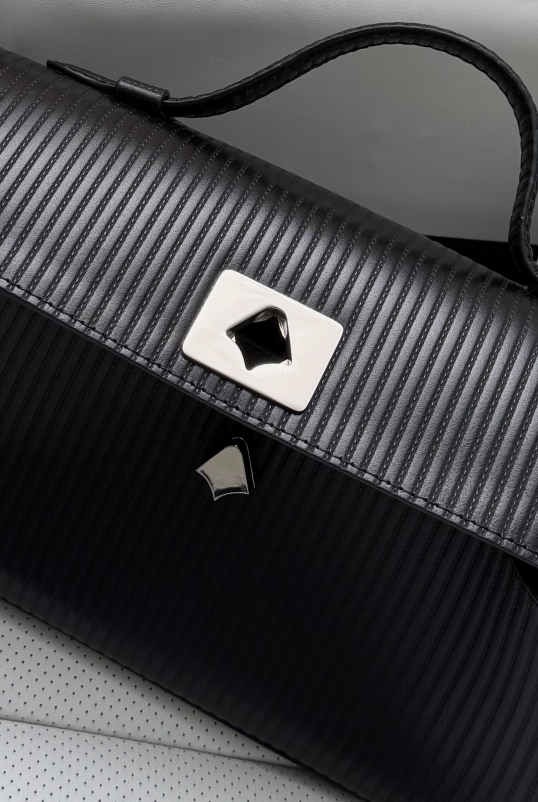
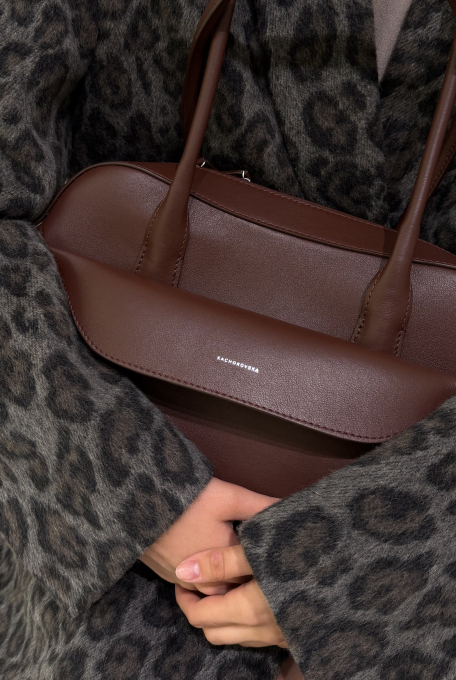




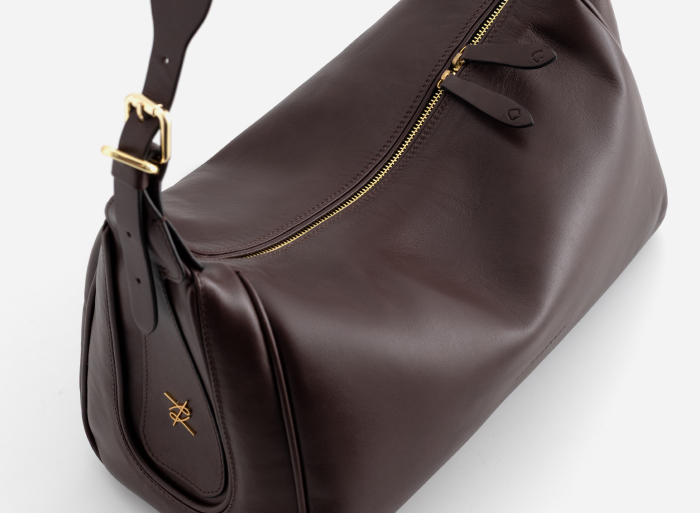
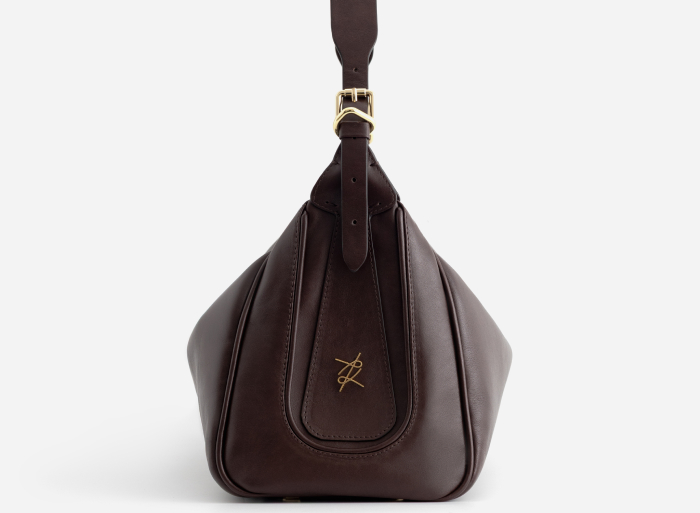
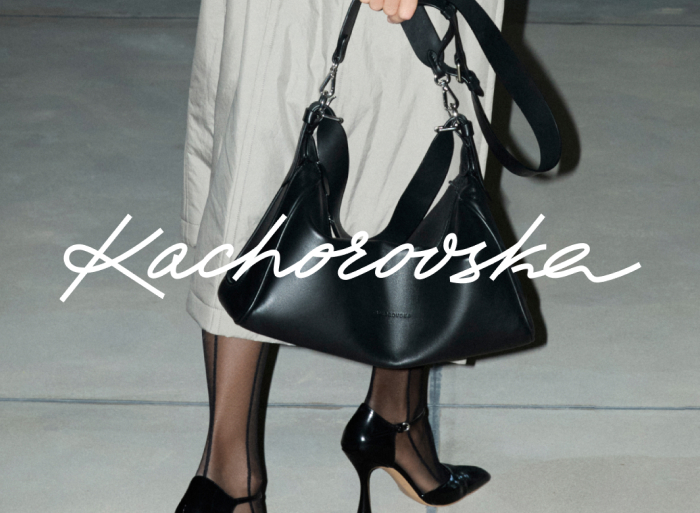
The YANA bag went from a sample that was initially set aside to becoming one of the most technically demanding designs in Kachorovska’s production. It was created for a collection with a distinct vintage aesthetic, built around an intricate structure and an abundance of details. The first prototype failed to win over the team and remained out of the collection for two years. The only person who saw its potential was Kachorovska’s Commercial Director, who bought the sample for herself and spent the next two years convincing the team to give the design a second chance.
Eventually, YANA got the green light, but that was only the beginning of its story. The bag’s construction proved to be a genuine technical challenge due to its numerous small details and the extensive amount of handwork involved. The finishing of the raw edges is particularly meticulous: each one requires careful hand-painting, making the production of a single bag time-consuming and demanding a high level of precision.
The complexity of the design became even more apparent when Kachorovska approached partner factories in Italy and Spain to produce larger quantities. Experienced European craftsmen assessed the construction and the amount of handwork required and ultimately declined to manufacture it. For the Kachorovska team, this became an important confirmation of the capabilities of its own production — it was Ukrainian artisans who were able to bring YANA’s complex construction to life as originally envisioned.
 |  |
 |  |